HEALTHESCAPE
A habit-driven health companion designed to turn consistency into a lifestyle.
Mobile App Design | UX Strategy | Behavior Design | UI System

Role
UI UX Designer
Project
App Design
Duration
2-3 Weeks
Year
2024
Tools


OVERVIEW
Designing consistency, not tracking
Healthscape rethinks health tracking by shifting the focus from numbers and metrics to daily habit formation. The goal was to design a system that helps users build sustainable wellness routines through small, repeatable actions.
Most health apps fail not because users lack information, but because they fail to maintain consistency. People start with motivation, but drop off when faced with overwhelming dashboards, excessive data, and unrealistic expectations. This project explores how design can make health feel achievable by focusing on habits instead of tracking.
THE REAL PROBLEM
Where users lose motivation
Users feel:
-
Overwhelmed by too much health data
-
Demotivated when they miss targets
-
Intimidated by complex fitness apps
-
Unable to stay consistent for more than a few weeks
The real gap wasn’t tracking. The gap was behavior support.
DESIGN GOALS
Making habits effortless
Design a health app that:
-
Encourages daily consistency
-
Removes cognitive overload
-
Makes health tracking effortless
-
Motivates users through progress, not pressure
INSIGHTS
What research revealed about behavior
Research revealed key behavior patterns:
-
Users abandon health apps within 2–3 weeks
-
People prefer small achievable goals over big fitness plans
-
Visual progress is more motivating than numbers
-
Users want encouragement, not judgment
This led to a core principle:
Make habit completion easier than skipping it.
USER PERSONA
Designing for real routines
Primary User: Busy working professional trying to improve lifestyle but struggling with consistency.
Needs: Simple daily actions, motivation, and clarity.
Frustrations: Complicated dashboards, unrealistic goals, and time-consuming tracking.

Pain Points
Limited Time: Pranjal often feels time-strapped due to work commitments, making it difficult to consistently follow a workout or nutrition plan.
Lack of Motivation:
Pranjal sometimes lacks the motivation to exercise or eat healthily, especially after a long day at work.
Stress Management: Managing stress is a priority, but Pranjal struggles to find effective methods that fit seamlessly into her daily routine.

Pain Points
Limited Time: Dipti's days are packed with family responsibilities, leaving her with limited time for personal activities like exercise and self-care.
Meal Planning Challenges: Balancing family preferences, dietary needs, and time constraints makes meal planning a challenge for Dipti.
Need for Support: Being a stay-at-home mom, Dipti sometimes feels the need for external support, encouragement, and a sense of connection with others in a similar situation.
USER JOURNEY
A 10-second daily ritual
Instead of showing feature movement, this shows behavior flow:
-
Select habits during onboarding
-
Open app once a day
-
Complete habits in one tap
-
See visual streak progress
-
Feel encouraged to continue
Daily interaction time: under 10 seconds
THE INFORMATION ARCHITECTURE
Clarity through simple architecture

KEY FEATURES
Small actions, meaningful progress
-
Personalized habit selection
-
One-tap habit completion
-
Streak-based motivation
-
Weekly progress summary
-
Gentle reminder system
-
Minimal analytics focused on consistency
WIREFRAMES
Removing friction, screen by screen
The wireframes focused on:
-
Reducing visual noise
-
Making actions obvious
-
Prioritizing completion over exploration
-
Keeping screens breathable and calm
Every screen was designed to answer: “Can this be done faster and simpler?”

DESIGN SYSTEM
Calm, encouraging, breathable
The visual language was designed to feel:
-
Calm, not intense
-
Encouraging, not clinical
-
Friendly, not technical
Soft colors, whitespace, and minimal components help reduce cognitive pressure and support a habit-friendly environment.
Calming Color Scheme


Typography

Design System

NAV BAR

ICONS

UI DESIGN INTERFACE
Where habits meet simplicity
The final interface reflects the philosophy of: Small actions. Clear progress. No over whelm.
Users can interact with the app quickly without feeling like they are managing a system.
The Onboarding

"The Splashscreen"
"The Onboarding process makes sure that your experience through the application is especially curated as per you. This helps in filtering the recommendations as per the User's needs and takes them a step closer to fulfilling their goals."

The Homescreen

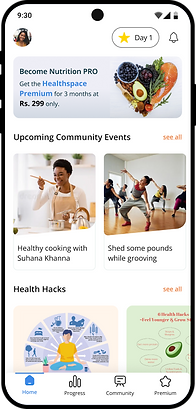

"The Homescreen is designed keeeping in mind that the users don't get distracted from the real goal of using the application."
"The Daily Streaks system helps in keeping them motivated to visit the app everyday and gives them a sense of accomplishment along the same."
"The Collapsible menu focusses on their personal journey, progress and acheivements with an ease of access."
Premium Membership


"The Premium Membership program offers a wealth of exclusive benefits to enhance your wellness journey. From personalized coaching to premium content, it's your ticket to unlocking the full potential of Healthsecape."
Refer and Earn


"The Refer & Earn program helps in easily inviting friends to the app so the users can build a healthy and supportive community for themselves.
THE PROTOTYPE

DESIGN CHALLENGES
Solving for consistency
Challenge 1: Health apps often overwhelm users with data
Solution: Removed complex analytics and focused on streak visuals.
Challenge 2: Making Habit Tracking Engaging
Solution: Introduced visual rewards and micro-feedback.
Challenge 3: Designing for long-term consistency
Solution: Reduced daily interaction to a single tap.
OUTCOME
From tracking to transformation
The final design successfully:
-
Encourages daily engagement
-
Reduces friction in health tracking
-
Makes users feel motivated instead of judged
-
Turns health into a habit-building process rather than a tracking chore
The final design transforms health tracking into a lightweight daily ritual rather than a task. It supports users emotionally and behaviorally, helping them stay consistent without pressure.
KEY LEARNINGS
What this project taught me
-
Behavior design is more powerful than feature depth
-
Simplicity increases consistency
-
Emotional design plays a crucial role in habit formation
-
Reducing friction is the key to engagement
CONCLUSION
Designing for sustainable wellness
Healthscape is not just a health tracking app — it is a system designed to help users build a healthier lifestyle through small, consistent actions. By focusing on habits instead of metrics, the product creates a supportive environment where users can sustainably improve their well-being.
Healthscape demonstrates how thoughtful UX can shift the focus from tracking performance to building habits. By removing complexity and supporting daily consistency, the app creates a sustainable approach to personal wellness.
THANK YOU
Grateful you made it here — every project is a story, and I’m glad you shared this one with me.
MORE WORK
Keep Exploring.


